These are facts that I found astonishing and really show how big this trade was. Its also interesting to read about how the UN is cracking down and all of their various tactics.
1) This trade generated up to 90% of the heroin used on the European and 70% of all opium sold worldwide as of 1995.
2) The trade has fallen 94% in Laos as of 1998 because of efforts from both the UN and China
3) Contrary to beliefs, many of the farmers who grew the opium are upset with the government as they have no sort of profits. A large amount of farmers are struggling to switch from opium to cash crops.
4) An estimated 100,000 opium addicts in just Laos alone, but this number is decreasing at the price for opium was sky rocketed due to the rarity and lack of production.
5) Khun Sa, the recent drug lord who died, was connected to 45% of all of the worlds drugs in the 1980s.
Thursday, May 6, 2010

Some Pictures from Taiji
Here are some pictures from Taiji, Japan, one of the main places where the killing killing takes place.

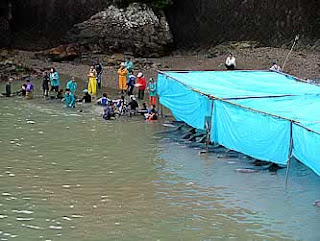


Aquariums that buy Dolphins and Whales Illegally
Here is a list of some aquariums that have boughten and shown dolphins and whales that they have gotten illegally.
Miami Seaquarium: Obtained two Risso’s Dolphins (Grampus) from Taiji, Japan, via Jay Sweeney. Both dolphins caught in a 1989 hunt. Both died at Miami Seaquarium in 1989 and 1995.
Miami Seaquarium: Obtained two bottlenose dolphins from Iki Island (drive hunt), Japan, via Jay Sweeney. Both dolphins caught in 1989 hunt; one died 1991, the other in 2000.
Sea World San Diego: Obtained three false killer whales, two from Taiji, Japan and one from Iki Island, Japan, via the Fishermen’s Union. Two caught in 1981 and one caught in 1984; alive in 1991 (date of report).
Indianapolis Zoological Society: Obtained two false killer whales from Taiji, Japan, via Jay Sweeney, in 1989. One died in 1992, the other in 1998.
Naval Comm, Control & OC Surveillance Ctr (US Navy Trained Dolphins): Two Risso’s dolphins obtained from Taiji, Japan, in 1989. One died in 1989, the other in 1999.
Marine World Africa USA (now Six Flags Discovery Kingdom, Vallejo, CA): Sought to import four false killer whales in 1993. Earth Island letter (dated May 5, 1993) to NMFS expressed opposition to the illegal, inhumane captures of drive hunts. Permission for import denied by NMFS (letter dated May 7, 1993).
Miami Seaquarium: Obtained two Risso’s Dolphins (Grampus) from Taiji, Japan, via Jay Sweeney. Both dolphins caught in a 1989 hunt. Both died at Miami Seaquarium in 1989 and 1995.
Miami Seaquarium: Obtained two bottlenose dolphins from Iki Island (drive hunt), Japan, via Jay Sweeney. Both dolphins caught in 1989 hunt; one died 1991, the other in 2000.
Sea World San Diego: Obtained three false killer whales, two from Taiji, Japan and one from Iki Island, Japan, via the Fishermen’s Union. Two caught in 1981 and one caught in 1984; alive in 1991 (date of report).
Indianapolis Zoological Society: Obtained two false killer whales from Taiji, Japan, via Jay Sweeney, in 1989. One died in 1992, the other in 1998.
Naval Comm, Control & OC Surveillance Ctr (US Navy Trained Dolphins): Two Risso’s dolphins obtained from Taiji, Japan, in 1989. One died in 1989, the other in 1999.
Marine World Africa USA (now Six Flags Discovery Kingdom, Vallejo, CA): Sought to import four false killer whales in 1993. Earth Island letter (dated May 5, 1993) to NMFS expressed opposition to the illegal, inhumane captures of drive hunts. Permission for import denied by NMFS (letter dated May 7, 1993).
Interesting Facts
1. Mohammad Khatami, a previous leader, let women go skiing without the normal gender barriers. Women were allowed to wear ski attire rather what all women were supposed to wear. They were also let on ski lifts and gondolas with men and were allowed to ski with men. The gender barrier was nonexistent on the ski slopes and so women saw this as a chance of freedom sort of. They have police that are supposed to make sure none of the Islamic values are compromised or broken but they haven't been given skis. So as long as the women are on the slopes, they are fine.
2."There is nothing in Islam that says that (women) working is forbidden...If a woman wants to work, she should be able to. She should be able to tell her husband that she doesn't want to just sit around the house... Some men and women deny the right of women to work, and this is either a result of ignorance or holding on too tightly to tradition." These quotes were said by Dr. Umayma Ahmad Al-Jalahma. She is arguing the fact that Islam should not prevent women from working. She thinks that people should be able to adapt and have the freedom to work if they wish. I thought this was interesting because this shows progress regarding the rights of women in Islam and my above point does too. You don't normally hear about the freedom women have. You mostly hear about what they struggle with or what they don't have.
3. From one of my sites, I found that women who have been around longer know many things about what women can do that is normally restricted by law. For example, they are allowed to be educated and it is illegal to keep girls from going to school. Apparently the laws may have been altered a little to what people think women can and can't do but in reality they haven't been part of the Islamic tradition and religion.
4. Iranian women were just allowed to participate in the FIFA Youth Olympics if they were caps instead of the traditional hijab. I think that this is both good and bad. They are allowing the women to play but they are not allowed to wear what they are supposed to wear traditionally. I think it is a good step in the right direction but there is still some work and adaptation that other organizations could do.
5. Islam has made some changes to modernize and make more sense of its self. Islam has gotten rid of polygamy because the Koran states that wives should be treated equally and if you have six it is hard to treat them all the same. They considered it too much work for even a very wealthy man. I think that this is interesting because it shows that Islam is adapting and modernizing sort of. They are trying to make their religion more practical and it will only be a matter of time when the women are completely equal to men.
Interesting Facts about The Killing of Dolphins and Whales but mainly Dolphins
• 23,000 permits are issued each year by the Japan Fisheries Agency to kill dolphins, porpoises, and other small whales. The total kill varies from year to year (for example, in 2007, 13,107 dolphins and small whales were reported killed in Japan waters. These numbers do not include the large whales killed under so-called “scientific” whaling permits in the North Pacific and Antarctic Oceans.). This is the largest scale slaughter of cetaceans in the world.
• About 1,200 to 1,800 dolphins and other small whales are killed in the so-called dolphin drive hunts that takes place six months out of the year in Taiji. The rest are killed with hand-held harpoons from small boats out at sea.
• In the small fishing village of Taiji, Wakayama prefecture, the dolphin drive hunt is carried out by about 26 fishermen from September 1st though March.
• Operating with 13 motorized boats, the fishermen go out to sea at early sunrise and look for migrating dolphins. Banging on metal pipes submerged into the water, they terrorize the dolphins with a "wall of sound," causing the dolphins to panic.
• Terrorizing the dolphins with underwater sound, the fishermen herd the dolphins into a secret killing cove close to Taiji Town.
• Often times, dolphins die during the chase that can last eight hours or more.
• The Taiji fishermen claim that dolphins eat too much fish and therefore must be exterminated.
• Operating with a permit from their government, the Taiji fishermen have referred to the dolphin hunt as "pest control."
• The majority of people in Japan have no knowledge about the annual dolphin blood bath.
• The fishermen kill the dolphins with spears, fishermen's hooks and knives. Trashing about in their own blood, the dolphins emit high-pitched screams during the massacre.
• The slaughtered dolphins are processed into meat and distributed to supermarkets throughout Japan for human consumption.
• Dolphin meat from drive hunts in Taiji proved to be highly contaminated with toxic chemicals such as mercury, methyl mercury and PCBs.
• Repeated chemical analyses have shown that the level of mercury in dolphin meat is much higher than the maximum allowable level set by the Ministry of Health, Labor and Welfare of Japan.
• Some of the dolphin meat is given to children as part of their school lunch program.
• The Japanese government and the supermarkets issue no warning that dolphin meat is mercury-contaminated.
• The fishermen of Taiji have told us that the Japanese people have no right to know about the dolphin hunt or the high levels of mercury found in the meat.
• Concealing this information from the public is a violation of Article 21 of the Japanese Constitution.
• Some members of the international aquarium and zoo industry are strongly connected to the Japanese dolphin slaughter, in that they pay top dollar for dolphins deemed suitable for commercial exploitation in dolphin shows and captive dolphin swim programs.
• Dolphinariums throughout the world, including Japan, repeatedly make the claim that captivity of dolphins promotes dolphin conservation and protection.
• Several of the hundreds of captive dolphins in Japan's 50 dolphinariums were obtained through the dolphin drive hunts; yet the dolphinariums do nothing to educate the public to the hunt.
• The World Association for Zoos and Aquariums (WAZA) is the world's largest network of zoos and aquariums around the world.
• Dolphinariums that have conducted business with the dolphin killers of Japan have been welcomed into WAZA's network, although the trade in these dolphins clearly violates WAZA's Code of Ethics.
• The dolphins that are purchased by members of the dolphin captivity industry represent a much higher commercial value to the Japanese dolphin hunters than the ones that are slaughtered for meat.
• Live dolphins captured in a Taiji dolphin drive hunt recently sold for $154,000 per dolphin.
• The Japanese dolphin hunt will continue for as long as members of the international dolphinarium industry continue to reward the hunters for show quality dolphins, thereby making the hunt tremendously profitable.
• The most sought after dolphin species for public display are bottlenose dolphins, orcas, white sided dolphins, Risso's dolphins, pilot whales and Pseudo orcas, all of which have been targeted in the Japanese dolphin drive hunt.
• About 1,200 to 1,800 dolphins and other small whales are killed in the so-called dolphin drive hunts that takes place six months out of the year in Taiji. The rest are killed with hand-held harpoons from small boats out at sea.
• In the small fishing village of Taiji, Wakayama prefecture, the dolphin drive hunt is carried out by about 26 fishermen from September 1st though March.
• Operating with 13 motorized boats, the fishermen go out to sea at early sunrise and look for migrating dolphins. Banging on metal pipes submerged into the water, they terrorize the dolphins with a "wall of sound," causing the dolphins to panic.
• Terrorizing the dolphins with underwater sound, the fishermen herd the dolphins into a secret killing cove close to Taiji Town.
• Often times, dolphins die during the chase that can last eight hours or more.
• The Taiji fishermen claim that dolphins eat too much fish and therefore must be exterminated.
• Operating with a permit from their government, the Taiji fishermen have referred to the dolphin hunt as "pest control."
• The majority of people in Japan have no knowledge about the annual dolphin blood bath.
• The fishermen kill the dolphins with spears, fishermen's hooks and knives. Trashing about in their own blood, the dolphins emit high-pitched screams during the massacre.
• The slaughtered dolphins are processed into meat and distributed to supermarkets throughout Japan for human consumption.
• Dolphin meat from drive hunts in Taiji proved to be highly contaminated with toxic chemicals such as mercury, methyl mercury and PCBs.
• Repeated chemical analyses have shown that the level of mercury in dolphin meat is much higher than the maximum allowable level set by the Ministry of Health, Labor and Welfare of Japan.
• Some of the dolphin meat is given to children as part of their school lunch program.
• The Japanese government and the supermarkets issue no warning that dolphin meat is mercury-contaminated.
• The fishermen of Taiji have told us that the Japanese people have no right to know about the dolphin hunt or the high levels of mercury found in the meat.
• Concealing this information from the public is a violation of Article 21 of the Japanese Constitution.
• Some members of the international aquarium and zoo industry are strongly connected to the Japanese dolphin slaughter, in that they pay top dollar for dolphins deemed suitable for commercial exploitation in dolphin shows and captive dolphin swim programs.
• Dolphinariums throughout the world, including Japan, repeatedly make the claim that captivity of dolphins promotes dolphin conservation and protection.
• Several of the hundreds of captive dolphins in Japan's 50 dolphinariums were obtained through the dolphin drive hunts; yet the dolphinariums do nothing to educate the public to the hunt.
• The World Association for Zoos and Aquariums (WAZA) is the world's largest network of zoos and aquariums around the world.
• Dolphinariums that have conducted business with the dolphin killers of Japan have been welcomed into WAZA's network, although the trade in these dolphins clearly violates WAZA's Code of Ethics.
• The dolphins that are purchased by members of the dolphin captivity industry represent a much higher commercial value to the Japanese dolphin hunters than the ones that are slaughtered for meat.
• Live dolphins captured in a Taiji dolphin drive hunt recently sold for $154,000 per dolphin.
• The Japanese dolphin hunt will continue for as long as members of the international dolphinarium industry continue to reward the hunters for show quality dolphins, thereby making the hunt tremendously profitable.
• The most sought after dolphin species for public display are bottlenose dolphins, orcas, white sided dolphins, Risso's dolphins, pilot whales and Pseudo orcas, all of which have been targeted in the Japanese dolphin drive hunt.
5 intersting facts
So far i've decided that my essay will look at the fate of children in Cambodia, and a how the Khmer Rouge affected what happens to the youth in Cambodia. The main source of income in Cambodia come from agriculture, specifically rice farming. Families become desperate if crop fails, which is a main cause of the rising human trafficking in Cambodia. Sweatshops also employ many people. WIth these job options facing Cambodia's youth, Dancing Across BOrders provides hope to children there.
-The Movie Dancing Across Borders is about a boy named Sy (rhymes with we) who rises out of Cambodia and becomes a professional dancer in a ballet troupe in America
-Every year over 800,000 children are sold into the world of human trafficking
-due to lack of government and religious authority in cambodia, brothels are extremely common
-There are little laws in America regarding human trafficking, since it is relatively new in U.S.
-Demi Moore has started an international campaign and recently visited Cambodia
-New York Times journalist Nicholas Krisstoff traveled to Cambodia to report about the conditions, found that many children are involved and that possible solutions would be to have better education for girls world-wide to give them better job opportunities
-EVen after Khmer Rouge rule over Cambodia, over 70% of the population are rice farmers, making the whole country totally dependent on the irregular enviornment
The Killing of Dolphins and Whales Citations
Information Website about the Killing of Dolphins - Earth Island Institute. Save Japan's Dolphins. 2010. http://www.savejapandolphins.org/index.php (May 6th, 2010)
Information Website about the Killing of Whales - Whale and Dolphin Conservation Society. WCDS North America. http://www.wdcs-na.org/ (May 6th, 2010)
Article by BBC News about Killing of Dolphins - Michael Nelson. BBC News. April 22, 2010. http://news.bbc.co.uk/2/hi/asia-pacific/8599723.stm (May 6th, 2010)
Article by Times Online about Killing of Whales - The Sunday Times. Time Online. April 18, 2010. http://www.timesonline.co.uk/tol/comment/leading_article/article7100851.ece (May 6th, 2010)
A timeline of the history of whaling - Japan Whaling Association. Whaling Chronology. http://www.whaling.jp/english/history.html (May 6th, 2010)
Information Website about the Killing of Whales - Whale and Dolphin Conservation Society. WCDS North America. http://www.wdcs-na.org/ (May 6th, 2010)
Article by BBC News about Killing of Dolphins - Michael Nelson. BBC News. April 22, 2010. http://news.bbc.co.uk/2/hi/asia-pacific/8599723.stm (May 6th, 2010)
Article by Times Online about Killing of Whales - The Sunday Times. Time Online. April 18, 2010. http://www.timesonline.co.uk/tol/comment/leading_article/article7100851.ece (May 6th, 2010)
A timeline of the history of whaling - Japan Whaling Association. Whaling Chronology. http://www.whaling.jp/english/history.html (May 6th, 2010)
theeeee five interesting facts
- Stetson University students spend a day wearing a veil to feel the perspective of those women. A professor, Khadher said, "They were ignored, despite the visibility of the veil itself, they became invisible for most people. Some students talked about their closet friends who would look at them and not see them, would not know who they are."
- During International Women's Day, a Muslim woman named Fakhraie explains her feelings about the stereotypes in our community. One thing that irritates her the most is how the image used to represent Islam or Muslim people, is always a lady wrapped in a veil. She concludes from this that nobody will ever be curious about the background of the woman, their personality or where they come from.
- A Muslim woman in France was given a few hundred dollar ticket for wearing a veil on her head. The officer said it limits her vision of the road and can cause a sudden accident. This is a valid reason, because veils are banned in France.
- After the ban of veils in France, the government was afraid that their country would become a target for terrorists. Sarkozy tried to make the ban of veils as nice as possible by clarifying that nobody should be "stigmatised."
- Turkey also lifted the ban of veils but in a more milder way. They allow the Muslim women to wear hijabs but not in open public programs. For example, young girls must remove their hijab when entering a university, but they can put it on again.
Sources from earlier 5 articles
5 Interesting Facts
- Potatoes were not always loved. After they were brought to Europe they were seen as food for the underclass. This was due because of their relationship to poisonous plants, if let in the sun for too long the potato turns green on top of having a bitter taste they would make some people ill.
- Potatoes became popular until Antoine August Parmentier with a skillful plan made them popular. Parmentier got a piece of land and planted potatoes by day he would have the field guarded. Leading to people becoming very curious and making them steal this valuable vegetable.
- The first people to accept the potato however were the Irish because they were able to plant them in abundance due to their climate. However this lead to the potato famine.
- Developing countries have recently increased in potato production which I believe is due to the amount of nutrition the potatoes provide and also possibly because of their popularity world wide.
- Even though Asia/Oceania have the largest population and are the largest potato producing areas, they do not even eat half the amount that the Europe or North America regions eat. Europe stands at 87.8 kg per capita while North America is 60.0 kg per capita.
http://www.potato2008.org/en/
Opium Bibliography
Bibliography
2001, November, the collapse of the economy, and 300&. "Opium production in Afghanistan - Wikipedia, the free encyclopedia." Wikipedia, the free encyclopedia. http://en.wikipedia.org/wiki/Opium_production_in_Afghanistan (accessed May 6, 2010).
2008, as more areas in the north, centrally appointed officials allegedly reached power-sharing agreements over drug routes.Today, even as fewer provinces cultivate opium, licit GDP increases, much of the Afghan state remains politically, as earnings from drug cultivation, processing, smuggling inject cash into Afghanistan's agricultural, consumer, labor, construction markets. Despite measured international confidence in Afghanistan's current minister of interior, northeast went poppy-free, a growing number of international bodies active in Afghanistan confidentially indicate that provincial, profit, international officials, political officers in Afghanistan were reporting that the northeast border provinces of Kunduz, Baglan, Takhar were crisscrossed with drug-, weapon-smuggling routes, that in newly poppy-free Badakhshan, and local commanders. "The Good and Bad News about Afghan Opium - Council on Foreign Relations." Council on Foreign Relations. http://www.cfr.org/publication/21372/good_and_bad_news_about_afghan_opium.html (accessed May 6, 2010).
"Afghanistan's poppy politics." Gale Database. galenet.galegroup.com/servlet/HistRC/hits?docNum=A55852738&tab=2&locID=menlo_schlib&origSearch=true&hdb=ALL&t=RK&s=1&r=d&items=0&secondary=true&o=&sortOrder=&n=10&l=dJ&sgPhrase=false&c=5&tabMap=82&bucket=iac&SU=opium+in+afghanistan (accessed April 22, 2007).
"The Holy Men of Heroin: Afghanistan has been ruined by war. But it does one job better than anyplace else in the world: produce opium." Gale Database. galenet.galegroup.com/servlet/HistRC/hits?docNum=A57841082&tab=2&locID=menlo_schlib&origSearch=true&hdb=ALL&t=RK&s=1&r=d&items=0&secondary=true&o=&sortOrder=&n=10&l=dJ&sgPhrase=false&c=3&tabMap=82&bucket=iac&SU=opium+in+afghanistan (accessed December 6, 1999).
"The Opium Brides Of Afghanistan." Gale Database. galenet.galegroup.com/servlet/HistRC/hits?docNum=A177334437&tab=2&locID=menlo_schlib&origSearch=true&hdb=ALL&t=RK&s=1&r=d&items=0&secondary=true&o=&sortOrder=&n=10&l=dJ&sgPhrase=false&c=1&tabMap=82&bucket=iac&SU=opium+in+afghanistan (accessed May 7, 2008).
Wednesday, May 5, 2010
citations so far for Cambodia
Citations:
Carvin, Andy. “From Slideshow to Genocide.” http://www.edwebproject.org/sideshow/khmeryears/index.html (Accessed April 27 2010)
“Communist Party of Kampuchea-Wikipedia, the Free Encyclopedia.” April 2010. http://en.wikipedia.org/wiki/Communist_Party_of_Kampuchea (accessed May 5, 2010)
Gale online Student recourse center Gold, s.v. “Vietman Troups withdrawl from Cambodia.”
Gold, Sylviane. “Dancing Across Borders.” March 19, 2010. New York Times. http://www.nytimes.com/2010/03/21/movies/21bass.html (Accessed April 27, 2010)
“First Run Features: DANCING ACROSS BORDERS.” 2010 http://firstrunfeatures.com/dancingacrossborders.html (accessed May 5, 2010)
Bibliography
- Brain, Marshall. "How Nuclear Power Works." How Stuff Works. http://science.howstuffworks.com/nuclear-power.htm (accessed May 4, 2010) Talks about how nuclear power works to generate energy and the reactions that occur.
- "Nuclear Power: Energy from Splitting Uranium Atoms." Energy Sources Info. http://www.darvill.clara.net/altenerg/nuclear.htm (accessed May 4, 2010). Talks about advantages and disadvantage of nuclear power and how it can be used.
- "Nuclear Power Now," Nuclear Power Now: General Info. http://www.nuclearnow.org/ (accessed May 4, 2010). Talks about general information about nuclear power and how its a prominent source of energy.
- Smith, S.E. "What is Nuclear Power?" Wise Geek. http://www.wisegeek.com/what-is-nuclear-power.htm. (accessed May 04, 2010). Describes what nuclear power is and how it works. Describes process of generating it.
- "Nuclear Power." Union of Concerned Scientists. http://www.ucsusa.org/nuclear_power/. (accessed MAy 04. 2010). The website provides links to various articles written or read by the Union of Concerned Scientists talking about nuclear power and the upsides and downsides. also it talks about various safety hazards and enviromental hazards.
Tuesday, May 4, 2010
Bibliography
1) Melt, Carl. "Eyewitness: The Golden Triangle Poppy Fields". January 2002. BBC News. http://news.bbc.co.uk/2/hi/asia-pacific/1768035.stm accessed on (May 04, 2010).
Talks about the actualy poppy fields and their effects on Thailand and the rest of SE Asia
2) Fuller, Thomas. "Notorious Golden Triangle Loses Sway in the Opium Trade". Septermber 2007. NY Times. http://www.nytimes.com/2007/09/11/world/asia/11iht-golden.1.7461246.html?_r=1&scp=3&sq=golden%20triangle&st=cse accessed on (May 04, 2010).Talks about the decline of this opium trade and how the UN is cracking down on it
3) Fuller, Thomas. "Khun Sa, Golden Triangle Drug King, Dies at 73". Septermber 2007. NY Times. http://www.nytimes.com/2007/11/05/world/asia/05khunsa.html?scp=5&sq=golden%20triangle&st=cse accessed on (May 4, 2010). Talks about the drug lord dying and it's effect on this trade and the SE Asia economy
4) Patton, Joseph. "South East Asia: The Golden Triangle". March 2006. Drugpolicy.org. http://www.drugpolicy.org/global/drugpolicyby/asia/seasia/ accessed on (MAy 04, 2010) This is very factual and talks a lot about the percentage of the economy etc.
5) Chouvy, Pierre-Armuad. "Drug Trade in Asia". April 2002. Geopium.org. http://www.geopium.org/drugtradeinasia.html accessed on (May 04, 2010) This ones talks about the effect this trade has on all of the Asian countires up to Japan.
Talks about the actualy poppy fields and their effects on Thailand and the rest of SE Asia
2) Fuller, Thomas. "Notorious Golden Triangle Loses Sway in the Opium Trade". Septermber 2007. NY Times. http://www.nytimes.com/2007/09/11/world/asia/11iht-golden.1.7461246.html?_r=1&scp=3&sq=golden%20triangle&st=cse accessed on (May 04, 2010).Talks about the decline of this opium trade and how the UN is cracking down on it
3) Fuller, Thomas. "Khun Sa, Golden Triangle Drug King, Dies at 73". Septermber 2007. NY Times. http://www.nytimes.com/2007/11/05/world/asia/05khunsa.html?scp=5&sq=golden%20triangle&st=cse accessed on (May 4, 2010). Talks about the drug lord dying and it's effect on this trade and the SE Asia economy
4) Patton, Joseph. "South East Asia: The Golden Triangle". March 2006. Drugpolicy.org. http://www.drugpolicy.org/global/drugpolicyby/asia/seasia/ accessed on (MAy 04, 2010) This is very factual and talks a lot about the percentage of the economy etc.
5) Chouvy, Pierre-Armuad. "Drug Trade in Asia". April 2002. Geopium.org. http://www.geopium.org/drugtradeinasia.html accessed on (May 04, 2010) This ones talks about the effect this trade has on all of the Asian countires up to Japan.
Work Cited
Works Cited
Hoedt, Rudolf . "Ghana racing against the oil curse | Ghana Business News." Ghana Business News :http://www.ghanabusinessnews.com/2010/04/17/ghana-racing-against-the-oil-curse/ (accessed May 5, 2010).
Ghana's struggles with Oil
Birdsall, Nancy , and Arvind Subramanian. "Saving Iraq from Its Oil." foreign affairs 84 (2004): 77-89. http://www.jstor.org/pss/20034048 (accessed May 4, 2010).
Since OIl has a true nasty side, Iraq needs to be saved from it
Dickey, Christopher. "Oil, Iraq's Greatest Asset, Could Doom Its Future - Newsweek.com." Newsweek - National News, World News, Health, Technology, Entertainment and more... - Newsweek.com. http://www.newsweek.com/id/234634 (accessed May 5, 2010).
Oil is both good and bad
Karl, Terry . "he Perils of the Petro-State: Reflections on the Paradox of Plenty." Journal of International Affairs 53 (1999): 32-48. http://www-leland.stanford.edu/group/polisci/faculty/documents/KarlParadox.pdf (accessed May 3, 2010).
SHows all aspect of oil and opinions of the negative effect oil has on the world
Ross, Michael. " The Political Economy of the Resource Curse." The Political Economy of the Resource Curse 51 (1999): 297-322. http://www.jstor.org/pss/25054077 (accessed May 3, 2010).
Resource Curse
Current Event #2
On CNN.com, I found an article about Picasso selling his art for a record price of $106.5 million dollars. For one piece of art, it costs more than to buy a humongous mansion. Art nowadays are more expensive especially from famous artists because they are not alive anymore to make such marvelous art. This connects to the lack of art ambition in the 1900s in the United States. During the 1900s, the United States went through wars, the Great Depression, and assassinations of presidents. People at the time did not have the money to buy expensive art from around the world. Today, the economy is finally getting better than before, and more people are spending money on items that want rather than they need.
CNN. "Record price puts Picasso firmly into his Green Period." May 4, 2010. < http://news.blogs.cnn.com/2010/05/04/record-price-puts-picasso-firmly-into-his-green-period/?hpt=T3 > (accessed May 4, 2010)
CNN. "Record price puts Picasso firmly into his Green Period." May 4, 2010. < http://news.blogs.cnn.com/2010/05/04/record-price-puts-picasso-firmly-into-his-green-period/?hpt=T3 > (accessed May 4, 2010)
Monday, May 3, 2010
Research Sources
Bibliography
An article about Madonna fights to Adopt a kid from Malawi
Fisher. "Madonna fights Malawi to Adopt Mercy". April 3, 2009. < http://abcnews.go.com/Entertainment/story?id=7249278&page=1 > (accessed April 29, 2010).
The poem about the White Man's Burden
Wikipedia. "The White Man's Burden". < http://en.wikipedia.org/wiki/The_White_Man's_Burden > (accessed April 29, 2010).
Angelina Jolie gets involved in Madonna's personal life
Mail Online. "Angelina Jolie attacks Madonna for "ilegal" adoption". January 7, 2007. < http://www.dailymail.co.uk/tvshowbiz/article-427057/Angelina-Jolie-attacks-Madonna-illegal-adoption-baby-David.html > (accessed May 2, 2010).
Eliza Fabillar. "Analysis of White Man's Burden". March 31, 2006. < http://historymatters.gmu.edu/d/6609/ > (accessed May 2, 2010).
As a thank you, Madonna has given a lot of money to the people in Malawi
Raphael Tenthani. "Madonna BACK in Malawi". May 4, 2010. < http://www.huffingtonpost.c/2010/04/05/madonna-back-in-malawi_0_n_525063.html > (accessed May 3, 2010).
An article about Madonna fights to Adopt a kid from Malawi
Fisher. "Madonna fights Malawi to Adopt Mercy". April 3, 2009. < http://abcnews.go.com/Entertainment/story?id=7249278&page=1 > (accessed April 29, 2010).
The poem about the White Man's Burden
Wikipedia. "The White Man's Burden". < http://en.wikipedia.org/wiki/The_White_Man's_Burden > (accessed April 29, 2010).
Angelina Jolie gets involved in Madonna's personal life
Mail Online. "Angelina Jolie attacks Madonna for "ilegal" adoption". January 7, 2007. < http://www.dailymail.co.uk/tvshowbiz/article-427057/Angelina-Jolie-attacks-Madonna-illegal-adoption-baby-David.html > (accessed May 2, 2010).
Eliza Fabillar. "Analysis of White Man's Burden". March 31, 2006. < http://historymatters.gmu.edu/d/6609/ > (accessed May 2, 2010).
As a thank you, Madonna has given a lot of money to the people in Malawi
Raphael Tenthani. "Madonna BACK in Malawi". May 4, 2010. < http://www.huffingtonpost.c/2010/04/05/madonna-back-in-malawi_0_n_525063.html > (accessed May 3, 2010).
Sources
Werdigier, Julia. "To Woo Europeans, McDonald's Goes Upscale." May 2010. New York Times. http://www.nytimes.com/2007/08/25/business/worldbusiness/25restaurant.html?_r=1 (Accessed May 2, 2010).
Mickelson, David."Ware's the Beef." May 2010. Snopes. http://www.snopes.com/politics/business/mcdbeef.asp (accessed May 1, 2010).
"McDonald's." May 2010. Wikipedia. http://en.wikipedia.org/wiki/McDonald's (Accessed May 2, 2010).
"Is McDonald's Social and Animal Friendly or Just Concerned With Their Image?" May 2010. Animal Freedom. http://www.animalfreedom.org/english/opinion/mcdonalds.html (Accessed May 3, 2010).
Grandin, Temple. "The McDonald's Effect." May 2010. Beef Magazine. http://beefmagazine.com/mag/beef_mcdonalds_effect/ (Accessed May 3, 2010).
Mickelson, David."Ware's the Beef." May 2010. Snopes. http://www.snopes.com/politics/business/mcdbeef.asp (accessed May 1, 2010).
"McDonald's." May 2010. Wikipedia. http://en.wikipedia.org/wiki/McDonald's (Accessed May 2, 2010).
"Is McDonald's Social and Animal Friendly or Just Concerned With Their Image?" May 2010. Animal Freedom. http://www.animalfreedom.org/english/opinion/mcdonalds.html (Accessed May 3, 2010).
Grandin, Temple. "The McDonald's Effect." May 2010. Beef Magazine. http://beefmagazine.com/mag/beef_mcdonalds_effect/ (Accessed May 3, 2010).
Research Bibliography
Doherty, Joseph."From West to East: Sport's Emerging Superstars Are Not Americans" Bleacher Report April 29, 2010 http://bleacherreport.com/articles/386098-from-west-to-east-sports-new-superstars-are-not-americans (Accessed April 29, 2010)
This article shows the pride of the Japanese when they see their star performing at an elite level of play.
http://en.wikipedia.org/wiki/Baseball_in_Japan
This site gives a lot of background to the meaning of baseball in Japan.
http://www.japanesebaseball.com/forum/thread.gsp?forum=2&thread=32681
This online discussion shows how important baseball is to the thousands of kids who play it at a very young age.
http://learnjapanese.elanguageschool.net/japanese-baseball-and-its-importance
This site gives a detailed description of the history of baseball in Japan.
Williams, Ingrid. "Japanese Baseball: Root, Root, Root and Buy Me Some Eel." New York Times July 5, 2009 http://travel.nytimes.com/2009/07/05/travel/05journeys.html?scp=1&sq=baseball%20in%20japan&st=cse (Accessed April 29, 2010)
This article displays the intensity that fans will show when they are watching their favorite baseball teams play in the game.
This article shows the pride of the Japanese when they see their star performing at an elite level of play.
http://en.wikipedia.org/wiki/Baseball_in_Japan
This site gives a lot of background to the meaning of baseball in Japan.
http://www.japanesebaseball.com/forum/thread.gsp?forum=2&thread=32681
This online discussion shows how important baseball is to the thousands of kids who play it at a very young age.
http://learnjapanese.elanguageschool.net/japanese-baseball-and-its-importance
This site gives a detailed description of the history of baseball in Japan.
Williams, Ingrid. "Japanese Baseball: Root, Root, Root and Buy Me Some Eel." New York Times July 5, 2009 http://travel.nytimes.com/2009/07/05/travel/05journeys.html?scp=1&sq=baseball%20in%20japan&st=cse (Accessed April 29, 2010)
This article displays the intensity that fans will show when they are watching their favorite baseball teams play in the game.
5 Resource Sources
Mudditt, Jessica. “The slippery slope to freedom in Iran.” April 17, 2009. Spiked. http://www.spiked-online.com/index.php?/site/article/6552/. (accessed April 29, 2010).
“Islam supports working women: Ex-Shoura adviser.” September 2, 2009. Gale. http://galenet.galegroup.com/servlet/History/hits?docNum=CJ207088657&tab=64&locID=menlo_schlib&origSearch=false&hdb=ALL&t=RK&s=1&r=d&items=0&secondary=true&o=&sortOrder=RE&n=10&l=dN&sgPhrase=false&c=1&tabMap=82&bucket=nws&SU=islam+women. (accessed April 28, 2010).
"Nation of Islam." Civil Rights in the United States. 2 vols. Macmillan Reference USA, 2000. Reproduced in History Resource Center. Farmington Hills, MI: Gale. http://galenet.galegroup.com/servlet/History/. (accessed April 29, 2010).
Maqsood, Ruqaiyyah Waris. "Islam, Culture and Women." Islam For Today. http://www.islamfortoday.com/ruqaiyyah09.htm. (accessed May 3, 2010).
"FIFA compromise in hijab row over Iran women's team." May 3, 2010. CNN. http://edition.cnn.com/2010/SPORT/football/05/03/iran.hijab.women.fifa/. (accessed May 3, 2010).
THEEEEE five sources
Tristman, Pierre. “A Veil Uncovers Stereotypes.” Middle East Issues. http://middleeast.about.com/od/booksopinions/a/Islamic-Veil-Experiment.htm (accessed April 29, 2010).
“Activists Unveil Positive Power and Diversity of Muslim Women.” March 2010, Human Rights and Law. http://www1.voanews.com/english/news/human-rights/Activists-Unveil-Positive-Power-and-Diversity-of-Muslim--Women-86929812.html (accessed April 29, 2010).
Ganley, Elaine. “Muslim says mistresses are the French way of life.” April 2010, Associated Press. http://news.yahoo.com/s/ap/20100426/ap_on_re_eu/eu_france_forbidding_the_veil;_ylt=AqApG9ayOY0FRjhFr2_DhYNvaA8F;_ylu=X3oDMTMyNnY0NTlzBGFzc2V0A2FwLzIwMTAwNDI2L2V1X2ZyYW5jZV9mb3JiaWRkaW5nX3RoZV92ZWlsBHBvcwMxBHNlYwN5bl9hcnRpY2xlX3N1bW1hcnlfbGlzdARzbGsDbXVzbGltc2F5c21p (accessed April 27, 2010).
“France MP’s report backs Muslim face veil ban.” January 2010, BBC news. http://news.bbc.co.uk/2/hi/8480161.stm (accessed May 3, 2010).
“Lifting the veil ban in Turkey.” February 2008, The Brunei Times. http://www.bt.com.bn/opinion/2008/02/01/lifting_the_veil_ban_in_turkey (accessed May 3, 2010)
Subscribe to:
Posts (Atom)