Tuesday, March 23, 2010

WWII, Change

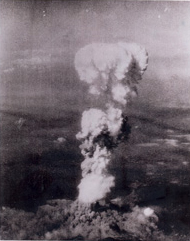
World War 2 definitely changed the definition of war and how it was fought. World War 1 was a war of attrition where all troops hid in tenches for months at a time and fought each other until either side ran out of troops. Machine guns and poison gas were key inventions during World war 1, and when used together they were one of the deadliest combinations. But when World War 2 comes, things change greatly. Armies begin to fight with a faster pace, and battles become much shorter. Blitzkrieg becomes popular, which is a type of fast warfare involving planes, ships, tanks, and other automobiles. Troops begin to fight, and are motivated by the goal of being the strongest in the world. Cities are invaded and countries are conquered. Automobiles, ships, airplanes and tanks end up playing a large role in the war in many wars. They increase the mobility of the troops and the speed they can move at, and they become dangerous weapons. Planes begin to be used to provide air support for the troops, and drop bombs. This has a huge impact on the war, and ends up leading to the deaths of many. Firebombing begins to happen using incendiary bombs to destroy large portions of cities, and kills hundreds of thousands. Then the atomic bombs were dropped on Hiroshima and Nagasaki, devastating Japan, and showing how dangerous an atomic bomb can be, and how much power it can give to an country. The atomic bomb was a weapon that could completely change the course of a war in seconds, and it did. These are just a few ways that WWII changed war.

The History of the Atomic Bomb

Sixty five years ago, the US dropped the atomic bomb on Hiroshima and dicated war against Japan. The bomb was so forceful that Japan's government decieded to raise a white flag and give up. The era of the bombings were the first of using extremly more powerful weapons then guns and cannons. This bomb destroyed Hiroshima and almost all of its citizens. The controversy of the bombings were based on killing so many people. If you think about it, it isnt that much worse than two countries at war, it wipes out many more people at one time, but in war, killing is not so fast but still a lot of people are murdered. In reality it is all bad but by wipping out all of the citizens at once was extremely more powerful and sent out a message to people not to mess with the US because their weapons are MUCH stronger than guns and knives.
http://www.gwu.edu/~nsarchiv/NSAEBB/NSAEBB162/index.htm


The Evolution of War

I think that war has completely changed after WWII. Almost every single aspect of the war has been changed varying from the battles, the diplomacy's, and the after effects of the war. If you look at WWI and how people prepared and fought during the war, it had almost nothing in common with WWII. Armies would sit in trenches for months seeing which army could last the longest, however this was the opposite in WWII. Armies were charging cities fighting with almost a sense of urgency. This made it much easier to conquer territories in a faster time, however the were more consequences. Also, both the naval and air force academies became HUGE factors in WWII. As we see with the Japanese-American fights in the Pacific, these both played major roles. However before, neither of these were used other then transportation of ammo and food. These two aspects almost determined the end of the war as we saw with the bombing in Japan. Another difference was the implications of the war. Millions died and it left nations in shambles and others trembling. This was the case with the US after they dropped the bomb. People around the world couldn't believe that they had that much power. It left nations in constant fear and would lead to the cold war. It was one of the first times in history where a weapon developed in war had such a psychological grip on the world. Overall, WWII changed both the concept and idea of modern warfare.

WWII Changing War

World War II definitely changed the definition of war. Almost every aspect of war changed, from the weapons used to the strategy and tactics. There was a huge difference between World War I and WWII. In World War I, most of the soldier sat in trenches and would come out only to immediately get shot by the opposing side. Compared to WWII, where the use of bombs became a new tactic. Also, instead of trenches on opposite sides, soldiers would storm cities and fight there. This allowed them to control areas more quickly. This is shown by the amount of cities that were destroyed in Japan by American forces.

The atomic bomb played a huge role in WWII. Not only did it show the power of the US but it devastated Hiroshima and Japan as a whole. It left the people in fear of what was to come and brought a new aspect to war itself. In my opinion, the atomic bomb was the biggest difference in the war and eventually changed future wars.

World War II's change on the definition of war

World War II introduced a new way of fighting and new weapons. The nuclear bomb was introduced and used on Hiroshima and Nagasaki. Firebombing also occurred. Both of these methods were very effective in the fact that they killed large amounts of people without much of a risk in doing it for the soldiers because most were done by air. This was very sad because many of the killings were used to demonstrate their power and how much destruction they could do so easily. Some who saw these killings that was thought of them as unnecessary considering how much damage was caused. Others saw it as necessary because they thought that they needed to make a statement and assure themselves that the place they bombed or burned would no longer be a threat. World War II had many killings but in large numbers rather than wars of attrition with killings but one by one being shot or killed in the trenches like in WWI. WWII was very traumatizing because having so many people who aren't necessarily directly connected to the war and were innocent civilians were killed. Whole cities were taken out and very few survived. The ones who did survive were traumatized for life because they saw their families and friends and just about everyone around them killed either by the bombs or burned to death. Trauma was a common result from war because it resulted a lot and was more commonly called shell shock in World War I.

Source:
In Class/Ms. Xia

WWII Definition

I think that the definition of war has changed a bit due to WWII because of the new technology. Over time we have developed from swords to guns and now we have bombs and other machinery that allows us to fight from a far and are even more deadly. WWII was the beginning of the first nuclear weapon and firebombing these weapons are deadly methods of destruction. This was a lot to lay on the USA, it gave them a lot of power over what they could do. They decided to bomb Hiroshima and Nagasaki killing many civilians. I think that after looking at the effects the bombing caused and the harm it changed what people thought of war. The idea of bombing harmless civilians seemed immoral and not beneficial all it brought was anger and fear from the enemy. Before this war there weren't that many rules because there was not much one could do in war that caused this much damage or gave one of the sides this much power. With the bombing of Hiroshima and Nagasaki, an imaginary line was drawn in what was good and bad in other words this caused a strong emphasizes in what was war crimes. In my opinion, war is fighting with in certain boundaries. Even though the civilians of Nagasaki and Hiroshima and countless others were affected and in a way became part of the war, I don't believe it was a total war. This is because, not everyone in Japan didn't all help. I don't mean it literally when I say everyone but instead that all men, women, children, and elders could help. Unlike in Italy where they are fascists and they say a women can help by working in the factories and build weapons, or a farmer can produce food for the troops or look at the sky for any signs of invasions, the Japanese didn't place emphasizes on everyone as a whole helping in the war. WWII changed war then what it used to be.

Citations:
Notes from class

Wednesday, March 17, 2010

Causes of World War II

World War II was a war not started by numerous countries at the beginning. I believe the war was started when Germany invaded Poland and gradually captured and took away all of the Jews. Because of that, Britain and France were immediately forced to help Poland since they were "assigned" to be allies with Poland. I actually believe that World War II started because of what happened to Germany in the Treaty of Versailles. They got the least amount of good things happen to them and weren't well off in the 1920s just like how every other country involved in World War I was. Since Germany did not get all of these nice things, their government was corrupt and didn't have any money to import or export goods. As Hitler arose as the new leader, he put the blame on anyone who wasn't part of the Aryan race. He mainly scapegoated the Jewish people and since most of the Jews at the time lived in Poland; that was why they attacked that country first. In the end, I would 100% blame Hitler and his clan for starting World War II.

Tuesday, March 16, 2010

A Cause of WWII

I believe that World War II started partially due to the division of territory on September 16th 1939 but there were also many other steps that lead up to World War II. On September 16th Russian joined Poland's territory and spilt it up to territories of Germany vs. Britain and France. But this was all located in Poland, so Poland was over loaded with people and the French and British declared war. But then Russia moved in, and no war was declared. It all had to do with the soviet Union because when they entered Poland all hell broke lose, and the Soviet Union started capturing the polish and being shit disturbers. So if all the nations stayed in their own regions a world war II may have never been caused.

http://www.threeworldwars.com/world-war-2/ww2.htm

Causes for WWII

I think that the main causes for WW2 the governments that were instilled in the countries that consisted the Axis of Evil. These countries had g'ments that promoted war and nationalism however on the other hand, France, Britian, and the USA had g'ments that did not want to fight. The economies did not rely on war and were still recovering the Great Depression, but the Axis g'ments were ready to get out and fight. This is why the Allies did nothing to let try and stop Hitler as he gained momontum in claiming Easter Europe. They did not want to interfer because they were not ready to fight again, but the Axis were ready beacuse of their very pro-militay g'ments. Almost the entire Japanese g'ment had been swallowed by war officials. Italy needed the war to boost their econmy and Hitler had almost brainwashed the entire g'ment and wanted to fufill his dream of having an "elite" race. Because of these reasons each nation was ready to fight while the Allies did not want a part of it. Before they knew it, the Axis had gained too much momontum and WW2 was about the start.

Main Causes of WWII

There were a couple of causes of World War II but they all seem to have to do with Germany and Italy. All the other countries had such a tough time and needed time to build up their forces again. They did not bother doing anything about what Germany and Italy were doing. Italy had not exactly gained or lost much in WWI, and Germany had lost a great amount but after Hitler came into power, he decided to break the rules of the Treaty of Versailles. Italy invaded Ethiopia in 1933 and Mussilini slowly strengthened his empire. Hitler on the other hand step by step broke the rules and built a stronger military force. He also made a smart move of signing the non-agression pact with Stalin.  During all these events, none of the other countries stopped Hitler in any way. 

Causes of WWII

I think the biggest cause of World War II was no one standing up to Germany and Italy. At the end of World War I, Germany got 10% of their land taken away, their military was cut down, and they had to pay for the reparations. Italy on the other hand got nothing out of the Treaty of Versailles. At the beginning Germany followed what the Treaty of Versailles said however, when Hitler came into power he increased the military and stopped paying the reparations. But no one protested. The war had just ended and no one wanted to fight again so they didn't say anything. Germany then annexed Austria, Czechoslovakia, and other German speaking parts. This was against the Treaty of Versailles and yet no one did anything. Britain and France had a small conference with Germany asking them to stop increasing their land, which Germany did not follow through. As you can see France and Britain didn't even try stopping them and this caused Germany to break loose and do as they pleased. If someone would have stood up to Germany and put an end to it, I don't think the events would have happened as they did.

Sources:
Notes
Strayer 645-649
"Long Term Causes of World War II" <>

Major Cause of WWII

I think that the major cause of WWII was because of the result of WWI. Britain and France (with some others) created the Treaty of Versailles and it took everything away from Germany and put the blame on them for the war. This cause Germany's anger and this made them want to fight. Then they started taking over Rhineland, Austria, and Czechoslovakia. Then when they all gave in and let Hitler take over those parts, then he grew and gained more power. This lead to later fighting against America and causing the second world war. Back to WWI, not ending up with a relatively even and peaceful closing to that war left Germany enraged because they wanted to get bak at France and Britain and somehow get back what they took. It wasn't a fair ending and so not having the war's end conflict resolved only lead to WWII because of left over anger.

Sources:
Ms. Xia (in class 3-15-10)

Causes of WWII

I think that one key reason why World War II occurred was because the United States wasn't willing to get involved until 1941. Hitler was able to sweep across Europe with relative ease because nobody was willing to touch him. Most major nations in the world were still recovering from the massive bloodshed of World War I, and they weren't interested in becoming entangled in another fight. The United States was unaffected by Hitler's genocide and invasions of neighboring countries, and American citizens were strongly against another war that would once again significantly damage their already fragile economic structure. They only got involved once Pearl Harbor was bombed, as their nation's security was threatened.

The Soviet Union was the only military power who was willing to initially fight against Hitler, in part because they were geographically and historically involved with the situation. It is questionable whether they would have been able to defeat the Germans without additional assistance from the United States.

Had the US gotten involved sooner, they could have stopped Hitler before Germany grew into a global superpower, thus preventing a World War from breaking out.

Monday, March 15, 2010

How Our State Should Change: Problems with the Current State of Our Union: Taxation and Education

Where We Stand Today
Statism, Taxation and Education

A theme that seems to be taken for granted in America today is that we supposedly all want the same things. The essential idea that many people hold here is that the majority of the United States population has common interests; therefore, taxation is effective because it expresses the will of the majority. This is a Utopian (or perhaps fascistic) aspiration for society that has not yet been achieved. First, we must take into account how the poor, middle, and elite classes are extended the opportunity to get educated. Second, we must address what the different WE's want to do with tax dollars in our local communities, states and countries.
The opportunity to become a taxpaying citizen is not equally distributed in any society. Yes, Horatio Alger’s stories are moving, but there are Mexican day laborers who work harder than most Americans and make less than minimum wage. This makes the opportunity to pay for one's own healthcare very difficult. It appears once we make some coin, WE don't want to share revenue with others in the form of taxes for Education and Healthcare....well, fine. Create a fool proof system that guarantees everyone is contributing to the economic pie, and then pay for these essential needs. I am certain this will involve taking away some freedom of choice and liberty; all you have to do is look towards practical, real life examples of communism or fascism in the 20th century to understand this fact.
Often there exists a class of people (generally the ones with the power and wealth) that don't want to allow others to become well educated. This class often ends up keeping all the wealth and opportunities to themselves.


You will have a fight on your hands.


What will you do with that group, their political influence, and the power behind their wealth?


Education in many forms is necessary in order to compete for wealth creation opportunities. Unfortunately, when one becomes wealthy it is natural to become headstrong, conservative, protective, and over confident about how they created personal wealth.
Men kept women from education and wealth creation opportunities, Whites did this to Minorities and Jews, and the Upper class has done it to the lower classes since the beginning of time, and everyone has exercised their supposed inherent authority over youth in some manner or another.
Can we uncover this practice today? You have to dig deep into the legal framework of most societies to uncover institutionalized systemic practices that deny opportunities to others. Overt discrimination is no longer acceptable. Most developed societies can cover up systems that deny opportunity to groups with propaganda and anger over issues like illegal immigration. It is common to scapegoat a group and cover up the real truth. The wealthy can use their wealth to steer contracts and business opportunities in their direction and better educate their offspring to perpetuate a closed system. Often these people know exactly what they are doing, but the offspring have no clue until it is too late. Well...knowledge is power, and it is never too late to share.
Are we sharing with lazy people who are not contributing to the economic pie? This seems to be the dilemma we have with ourselves over issues like Healthcare. To calm the poorly informed citizenry, academics should get out of their Ivory Towers perhaps they can uncover who is contributing and who is undeserving of Healthcare from tax dollars.

The practice of financial aid is a perfect example of a way to reverse the continuation of a systemic practice that allows the wealthy to keep more of the wealth in the hands of a few families, as is affirmative action. While affirmative action may irritate some minority geniuses and conservative thinkers, it will produce people who can be voices for the problems in the system, i.e. a voice for the lack of opportunity in the system from education to job creation and in the work force. Financial aid gives opportunities to the less fortunate in education and brings fresh eyes into a system that has previously excluded them. It is not just about tax dollars, healthcare and education, but it is a fresh perspective on various unresolved issues.

Taxation originated as a process whereby the government would step in and redistribute money from the rich to the poor, as well as collecting a communal pot that could be used towards fulfilling societal desires. However, this money can get tied up or redirected by clever politicians and business leaders, and never fulfill its intended purpose: to create more opportunity for all citizens.
At some point back in history someone created the foundation that allows a family’s wealth to be created; this foundation may have been legal or illegal (whether it is via the free market and trade, slavery, or warfare). Once established their process of building wealth can be considered legitimate by the government for many years and generations. With this historical framework in mind, to take a snapshot today of and create policy that will affect future generations is irresponsible. It is not impossible to find many people from lower incomes with 4.0 GPA's, who have worked harder in school but will only make half as much at their job as you or I will someday.
Please feel free to comment below, but remember to be thoughtful and respectful.
(Because getting two points on a 10th grade extra credit blog assignment simply isn’t worth anyone’s time if you aren’t willing to sit down for a while, and think.)

Cause of WWII

I believe that the cause of the first world war was Germany's expansion. At first when it took over the Rhineland, it was as though Germany was testing the waters to see how far the western powers would let them go. They had already broken the treaty of versai by no longer paying the war indemnities and raising a large army, and now they were taking land that was given to Fracne through that treaty. The western powers let them have. Then germany wanted Austria and then Czechleslavokia and then Poland. It was the need for expansions, their goal of being like the British Empire that caused word war one. Germany would never stop growing and so the western powers had to put a stop to it when they finally invaded Belgium and then France.

Wednesday, March 10, 2010

Japan: Totalitarian?

Japan was very prosperous after WWI and had a growing democratic government. But the Great Depression hit them hard because their economic success was due to trade. they struggled with solving their economic crisis so they ended up turning to the military to handle things, so the military ended up taking matters into their hands. a military dictatorship formed in japan by the early 1930's. a small group of military leaders ended up dominating the government because japan didnt have on strong leading, like italy and germany did. japan did have some totalitarian characteristics: the began to impose censorship, arrest critics, and they created a special police force to hunt down enemies of the state. they then invaded Manchuria in order to gain an overseas empire that would provide them with raw materials.

http://fresno.k12.ca.us/divdept/sscience/history/totalitarianism.htm

Japanese Government

I think at the time that we are studying, the Japanese Government was not a totalitarianism government. This type of g'ment can be described as having 100% control of the laws, army, and this will give them the control of all of their citizens. This was not true for the Japanese g'ment but it was becoming more and more true as time continued. The military was becoming more frustrated with how the officials were dealing with Western powers and this lead to them trying to take control of the government. We see this when the military attacked the Manchus without the approval of the officials. The military would come to seize complete control during the time of WWII which is why they bombed America, something that the current Japanese government would never do due to their fondness of Western nations. At the time we are studying, the government was not totalitarianism but it soon would become this when the military was frustrated by the actions of their government.
Sorry it is late, thought it was due tommorow
Sources-Class

Tuesday, March 9, 2010

Was Japan Totalitarian

I believe that Japan was totalitarian because even thought they defeated the chinese and had a strong army, the japanese were facing a huge battle against their economy. Their army has been a big focus for centuries in Japan, and these were not fulfilling the ambition of Japan. With the Army going down hill and not being able to conquer on the road or at home during battle the Japanese were in for it. Japan needed a strong centralized government in which they had and is why japan was Totalitarian.

Used this website: http://www.jstor.org/pss/20028849

Extra Credit Blog

My view on whether or not government is a good thing, is that we indeed do need government, but maybe to a less extent. The Government is helpful in many ways, the main way is keeping the countries in order so that people do not break out in chaos. Without a government, passing any law would be extremely difficult and would make it almost impossible to do without rebellion. Because if passing a law meant that EVERYONE had to vote, then it would take a really long time and would be like a presidential election for everything trying to be passed, which would be simply ridiculous.

Japan...Totalitarian? hmmmmm.

Being totalitarian can be described as the form of government that does not tolerate different ideas or opinions and has dictatorial control over their people. During this time, Japan had Hirohito as their emperor. This alone point to the fact that their was a single ruler who had control over the people. Although the government had police with strict laws and penalties, it was not a complete secret. At this point in time, Japan was very focussed around their military. As their government began to lose to power, the military stayed strong because of the use of propaganda and because of their success. They were able to take control over Korea which gave the people of Japan a sense of strength and stability. Despite treaties and other agreements with nations such as the U.S. (which did not want Japan to grow their army), Japan chose to spend the time and money to grow their army and navy to a point where they were the 3rd largest navy in the world.

I think that Japan could be described as totalitarian. They had an emperor with complete control and a military with even more control. They captured the trust of their people with their ability to win battles and conquer nations.