This website is about the Hubble Telescope and the photos it had taken. I think it would be interesting to compare and contrast from the first telescope to the hubble and talk about the industrial revolution.
Showing posts with label Kaitlin_comment. Show all posts
Showing posts with label Kaitlin_comment. Show all posts
Saturday, April 24, 2010
Hubble Telescope
http://news.nationalgeographic.com/news/2010/04/photogalleries/100424-hubble-telescope-20th-anniversary-pictures/#hubble-cloudy-nebula-ngc-602_19426_600x450.jpg

Wednesday, April 14, 2010
Who is responsible in a war crime?
I researched more when I got home about who is responsible in war crimes and why more people should feel bad for the actions that they pursue in a crime. War crimes were happening all over the world during World War II and many followers of the Nazi Party took place in the killing of the Jews. We read a document written in the point of view of one of the Nazi commanders. He states that he was in great pain seeing these children and men suffering and having to be burned alive and dying in the gas chambers. If he felt any sympathy towards them, he would be killed as well. Back to the idea of who is responsible for the war crime, I would say that anyone who lets or does the duty of killing is considered responsible. It doesn't matter if you didn't help with the actual killing, but if you witnessed the scene you are held responsible. The Nazi commander did not think he was responsible for anything since he just gave the order to have someone kill the Jews, but in reality he could have stopped this and it wouldn't have been a war crime anymore.
Sunday, January 24, 2010
Kodak Camera vs Paintings

"You press the button, we do the rest." Creator of Kodak cameras, George Eastman said this in 1888. Cameras were only available to professional photographers, but Eastman created a kodak film roll that can take about 100 exposures. This way, even regular people can take advantage of the camera and carry it around in their hands. The customer uses the kodak camera and returns it to the company to receive clear prints.
If a camera can capture images perfectly, then what is the point of art? When new technology and advancements were made, there was a talk about how photography might take over the beauty of art. A photograph gives you an image of the real world, while art is all about color and interpretation in one artists mind. In the image above, you can see how the photograph is very dull but realistic. The painting seems to have a unique creativity that the artist chose himself. It has color and idea to it by changing its style.
http://lcni.uoregon.edu/~mark/Marks_photos/stereo_pairs/Apollo_moon/as12-49-7318_AstroOptiMax_comparison.jpg
Monet, the Impressionists

Monet was an impressionist in the mid-late 1800s. HIs paintings include Sunrise, Water Lillies, The poppies, and many others. Unlike other painters of his time, the impressionists would paint what they saw around them instead of copying from old paintings at the Louvre. Monet charmed his way into getting food and clothing while living in Paris and he eventually moved to Giverny. There he lived with all of his children and his 2nd wifes children, making it so that about 10 kids were running around. Monet created a remarkable garden for himself. This is wear he painted Water LIllies which to this day remains one of his most famous paintings, and an extremely well known picture in itself. He has rows of flower with sunflowers next to hibiscus, making a very diverse and beautiful garden. The most beautiful part of the garden in my opinion is the Water LIllies. He has Japanese bridges and a stream runs around all of it. The famous boat in his pictures is still there as well. (picture from http://www.allmonet.com/1%20Water-Lily_Pond__1897-1899.jpg) Most people hated Monet's pictures because they thought they looked so sloppy. Monet did find various customers in France who bought his work and kept him afloat. Clearly with such a nice in Giverny his work was somewhat appreciated, but most of the other impressionists never got to that point in their life-time. During the begining of MOnet's career, after attending well-renown painting schools the majority of France rejected all of Monet's paintings and he was not chosen to display paintings in the major auctions, museums, and collection locations in France.
Monday, January 18, 2010
Indian National Anthem

Thou art the ruler of the minds of all people,
Dispenser of India's destiny.
Thy name rouses the hearts of Punjab, Sind, Gujarat and Maratha,
Of the Dravida and Orissa and Bengal;
It echoes in the hills of the Vindhyas and Himalayas,
Mingles in the music of Yamuna and Ganga and is chanted by
The waves of the Indian Sea.
They pray for thy blessings and sing thy praise.
The saving of all people waits in thy hand,
Thou dispenser of India's destiny,
Victory, victory, victory to thee.
The Indian National Anthem is written in a style in which all the languages of the country can be given respect to along with the most popular places in the country. The tone of the anthem is saying how the country has so much goodness in its roots, and almost thanking the country for creating some popular places like the Himalayas or the Ganga (Ganges) River. One line in the national anthem translates to, "They pray for thy blessings and sing thy praise. The saving of all people waits in thy hand." Even though its not said in much detail, this line tells us how the people of India worship their country so much, and how much honor and pride they hold in their hearts. Hearing some things about India, a good example of pride for one's country, are all those men and women in the army. When I hear about the Indian army, it astonishes me how dedicated they are. In conclusion, the Indian National Anthem does a great job interpreting the wonders in their country and thanking their motherland for it.
Panamanian National Anthem
I chose to do the Panamanian National Anthem for many different reasons. My dad's mom, also known as my grandmother, was born and raised in Panama until she was old enough to go to college. The song name is called "Himno Istemño" (Isthmus Hymn) and it was sung in the orginal Spanish language. The Anthem was first performed in 1903 by citizens singing in the streets of their new country, but the anthem was not fully adopted until 1925. The Anthem defines the nation because as I read in the English Translation, it connects to the agriculture that the country of Panama contains. For example, "In the happy field of union." is part of a verse in the anthem. Even vaguely, "happy field" can relate to the fields in Panama. Another example would be "On your flower-covered soil,..." "Of this fertile land of Columbus." These lines of the anthem really shows that Panama has great land to harvest crops and raise cattle. Just how the Anthem defines Panama as more of a farming land and growing fruits and vegetables, it also is a way to encourage people to farm and harvest crops. If their National Anthem refers to these attributes so many times, why wouldnt people want to show some nation pride and start farming?
Monday, January 11, 2010
Causes for the Taiping rebellion
I personally believe that the Taiping uprising was completely directed towards the Opium war. After the British and the Chinese gov’t reached the agreements, the British basically gained 100% control of the Chinese gov’t. For the next 10-15 years, the Chinese gov’t stood by as the British called all the shots. After finally paying off all their debts, the Chinese gov’t gained control back. However, they were not prepared to have all the power back in their hands and were not ready to run the nation. The Chinese people knew this and noticed that they had to take action. This is where the Taiping uprising started and they knew they had to throw off the poor and weak gov’t that was in charge at the time.
Thursday, January 7, 2010
Nationalism and the Sepoy Rebellion
The Sepoy Rebellion was the First War of Independence in 1857. I was when Indian soldiers rebelled against the British authorities. An event that led directly to the Sepoy Rebellion was when there was a new rifle that came out and it was said to have been covered in a mix of cow and pig fat, both of which are sacred or religiously important to Hindus and Muslims. They found this very offensive and refused to use them. The authorities were not very happy with that decision of theirs and so many were put into jail, publicly humiliated, stripped in public, and sentenced to labor. Later, there was a big jail break which then caused a chain of jail breaks to occur. People heard about them and so many other people escaped. Then they invaded Delhi and replaced the current leader with a previous leader. Afterwards, the people who took part in the escape from the jails were tried and then strapped to and blasted by a cannon. From the document Aftermath of the First war of Independence they said "The Indians called it 'the Devil's Wind.'"
In my other blog I defined nationalism as "Nationalism is a person or groups "loyalty and devotion to a nation" I think that they were doing this out of nationalism because they were fighting back against the people who were selling things that disgraced their culture and religion. They were fighting because they were disrespected and thought of badly and wanted that to stop. The British was rude to the Indians and they called them "barbarians without any culture." (document Factors responsible for unrest amongst Indian masses) I think that their reasons for fighting was for pride in themselves and in their culture and religion. They were fighting for respect because the British disrespected them and the Indians wanted to make that change.
*Just about all Documents in Packet Used (not sure how to cite)
Tuesday, January 5, 2010
Boer War
The Boer War occurred in 1899 in South Africa. The "Boers" was a name for the Dutch Settlers. The war was the conflict between the British colonial rule and the "boers" or Dutch setters. They were arguing because they were fighting over who got the land and the African people. When war was first declared, the Dutch overpowered and conquered most of the British. But then, the British came back with a harsher response. They burned down many British farms and captured many wives and children and imprisoned them. They also made man africans, that were on the "side" or under control of the Dutch and they imprisoned them as well. They killed tons of these people that were imprisoned because they were not taken care of well enough. Where they were kept was very unsanitary which made living conditions really rough. They ended the war with The Treaty of Vereeniging. They estimate that several thousands of lives were lost, and about almost half of the Boer population.
Researching this made me think about how I would feel if people started a war where I was living and I had to live through it. I have never experienced a war where I have been living but I can imagine it is not very fun. I think it would be terrifying because I could easily walk out of my house going to school and happen to be in the middle of people fighting, and therefore I could easily get injured or worse killed! I think it must have been even weirder for the Africans because the two people who came in and had this war were not even really related or connected very much to the land. In Iraq, the Iraqi are fighting against the US and so it is at least there own people. That doesn't make it any more right but at least there is one familiar side. Not knowing at least one side would make it even harder to go through because then there is double the chances that you will get hurt. Having a familiar side means that they will probably try to avoid killing their own people as much as possible. Seeing that the Africans didn't really benefit from the war, I think that this must have been a dramatic change that they would have loved to avoid, especially considering that innocent people were taken and killed in prison camps.
Citation:
DISCovering World History. 2003. http://find.galegroup.com/gps/retrieve.do?contentSet=GSRC&resultListType=RESULT_LIST&qrySerId=Locale%28en%2
C%2C%29%3AFQE%3D%28ke%2CNone%2C8%29boer+war%24&sgHitCount
Type=None&inPS=true&sort=Relevance&searchType=BasicSearchForm&tabID
=T001&prodId=IPS&searchId=R1¤tPosition=2&userGroupName=menlo
_schlib&docId=EJ2105240003&docType=GSRC (accessed January 5, 2010).
Rubber

The para rubber grew originated from South America in Brazil. When Charles Marie de la Condamine returned from his voyage to Portugal, he brought back water-repellent rubberized cloth that shocked everyone. Condamine was accused of witchcraft because everyone was so shocked. Eventually rubber arrived to England, and it became clear that it was a great material to use on the tip of a pencil.
South America continued on to be the main supplier of rubber during the 19th century. However, in 1876, Henry Wickham gathered many rubber seeds, which were germinated (began to grow) in the UK. The seeds were then sent to the South East Asian countries, where they would become the biggest supplier of rubber.
Rubber was also supplied in the Congo, which was mainly forced labor. Liberia and Nigeria also began to grow rubber.
Much Earlier, the Ancient Mayans used rubber balls, hollow human figures, and as bindings for axes. Latex is the sap of different trees, most famous of the rubber tree. The Mayans learned to mix the sap with juice from the morning glory vines so that it would be more elastic and durable.
Their rubber balls were about the size of a beach ball, but weighed about 15 pounds. They were used in a ritualistic game called Tlachtlic. It was a cross between football and basketball. It's religious significance as recorded in the Popul Vuh, a Mayan religious document. The game also included gambling for things such as land or slaves. Some of the time it ended in a human sacrifice. This game was played from Southern Arizona, to Northern South America. Native people in the region still make rubber this way.
Picture Source
http://en.wikipedia.org/wiki/File:Latex_dripping.JPG
Other Sources
http://www.essortment.com/all/historyofrubbe_rcml.htm
http://en.wikipedia.org/wiki/Rubber
Monday, January 4, 2010
Ways of the World 560-563: Discovery of quinine

On page 562 of Ways of the World, there is a brief statement on things that helped expansion be more desirable, and doable. Among that list, there was the discovery of quinine, and I chose to do some extra research on the topic.
In the book, quinine is just described as something to prevent malaria. The book goes on to say that it greatly reduced deaths among Europeans that were in the tropics.
It was the Quechua of Peru and Bolivia who discovered this medicine in the chinchona tree and its relaxing effects to help to stop shivers from the really low temperatures, and the high altitudes. Then the Catholic missionaries brought the medicine over to Europe, where it was to become a vital element in there expeditions. The Jesuits (have to do with catholics) who were living in Lima, made a connection between the shivering caused by malaria, and the shivering of the Quechua. They noticed that the shivering was really similar, and so they brought some of the chinchona tree bark over to Rome where they ran tests on it to see if it treated malaria. It indeed helped prevent malaria, and so the bark became one of the most valuable commodities shipped at the time.
It may seem as if this wasn't that important, looking at the overall time period of expansion, but it was. This medicine made a lot more people want to go on voyages to expand, because they knew that they weren't going to die because of the Malaria, and so Europe grew. The discovery of the quinine medicine can easily be one of the major factors as to why Europe is so wealthy.
Suez Canal
 In our reading, there is an example of overseas expansion and how the newly man made Suez Canal played a role in this movement. The Suez Canal is a connection between the Mediterranean Sea and the Red Sea. It allows large ships to travel from Europe to Asia, not needing to travel around the tip of Africa.
In relation to the reading, Europeans could access the Asian countries more efficeintly with there large amounts of goods that needs to be sold. When ships reached the Suez Canal, they used telegraph, inventing a following underwater telegraph to help the communication amongst all the ships in the canal.
Google images
Saturday, January 2, 2010
The Cove

This is sort of random. But I just wanted to tell everyone about a movie I just saw. It is extremely interesting and I think it is something everyone should try to see. It is a very true documentary on the slaughtering of dolphins in Japan. It talks about a small town called Taiji with a big secret. Taiji has hidden coves where they lure dolphins everyday. They then kill those dolphins or sell them to aquariums or Seaworlds across the world. It changed my view on animals and fishing. It is mind boggling that they kill so many dolphins everyday. People are not allowed to take pictures or even enter these secret coves. They are kept completely secret. The only people that know about this problem are the fisherman, the government, and the police. The fisherman don't even understand what they are doing. They have been told that they need to kill the dolphins because the dolphins are eating all the fish. Japan's ruthless killing used to be a problem with whales and people were able to stop that. If we spread word of this we can stop the slaughter of dolphins forever. Please try to watch the movie or atleast look at the website. This is a big problem that needs to stopped.
This is the link to its website. Here
You can also go here to help stop the killing. Here
Sunday, December 6, 2009
Marx/Smith
After reading the 2 different sections, I thought that Karl Marx took a negative view from the perspective of a worker and knew a lot more about the struggles whereas Adam Smith knew a lot about the system but saw it as very effective. If I had to decide who I thought had better insight into this issue I would Choose Marx. Marx talked about how the worked was selling his labor for very little, allowing the capitalist to make a lot more money by selling the products the laborers make for as high as possible. Marx had a better idea of what was actually going on with this system, whereas Smith only saw the profit that was being made and the creation of new inventions and new technology. He said everyone working in their own self-interest was good for the country and that everyone this way could live a good life. However, this is not the case for those who were laborers working long hours and making next to nothing, unable to support their families and themselves. On the other hand, Marx continues to see all the flaws in the system, especially with machines and how they cut labor and slowly humans become "slaves" to them and capitalists can lower wages further and further. This is why I thought Marx overall had a better understanding of this system of work.
Wednesday, December 2, 2009
Treaty of Nanjing (Opium War)

The treaty of Nanjing was signed on August 29, 1842. It marked the end of the opium war between the Qing Empire and the British Empire. The treaty heavily favored the British because of the fact that the British had won the won by the end. The British would obtain 21 million dollars when the treaty was signed and would gain another 15 million in the next three years. They would also gain control of numerous ports and cities in China including Hong Kong. The Chinese gained almost nothing from this treaty but it was the only way they could obtain peace. This picture shows the signing of the treaty.
Picture from
http://en.wikipedia.org/wiki/File:Nanjingtreaty.jpg
Info from
http://galenet.galegroup.com/servlet/History/hits?docNum=BT3403700875&tab=4&locID=menlo_schlib&nav=1&origSearch=false&hdb=ALL&t=RK&s=1&r=d&items=0&secondary=false&o=&sortOrder=RE&n=10&l=dE&sgPhrase=false&c=1&tabMap=5&bucket=psm&SU=Treaty+of+Nanjing
Crystal Palace

The Great Exhibition of 1851 took place in the beautiful Crystal Palace, which located at the time, was in the heart of London. People from all over the world came to either show off their invention or come to look at all the prized possessions. The Crystal Palace held more than 12,800 square feet for all of the famous inventors to show off their masterpiece. In addition, the Crystal Palace was later used for numerous more events than just the first world fair ever to be done.
Citation of picture- http://www.ursusbooks.com/thumbnail.php?img=./itemimages/123543a.jpg&maxwidth=700
Primary Source: Statue of Liberty
The New Colossus, by Emma Lazarus
Not like the brazen giant of Greek fame,
With conquering limbs astride from land to land;
Here at our sea-washed, sunset gates shall stand
A mighty woman with a torch, whose flame
Is the imprisoned lightning, and her name
Mother of Exiles. From her beacon-hand
Glows world-wide welcome; her mild eyes command
The air-bridged harbor that twin cities frame.
"Keep, ancient lands, your storied pomp!" cries she
With silent lips. "Give me your tired, your poor,
Your huddled masses yearning to breathe free,
The wretched refuse of your teeming shore.
Send these, the homeless, tempest-tost to me,
I lift my lamp beside the golden door!"
My Analysis:
Above is a poem I found that describes the Statue of Liberty. The statue itself sends a message to people and nations. A message that states her "commanding" presence, her "mighty" stature, and her "welcoming" nature. All of these are meant to describe the U.S. as a country. The golden door is America. The Statue of Liberty represents the U.S. for the rest of the world.
http://galenet.galegroup.com/servlet/History/hits?docNum=CD2154000050&tab=4&locID=menlo_schlib&nav=1&origSearch=false&hdb=ALL&t=RK&s=1&r=d&items=0&secondary=false&o=&sortOrder=RE&n=10&l=dE&sgPhrase=true&c=1&tabMap=119&bucket=psm&SU=%22statue+of+liberty%22
Shackleton and Discovery

This is a picture of Ernest Shackleton's ship crashing in Antarctica. Shackleton was an explorer of the late 1800s and early 1900s. His goal was to become the first explorer, along with his crew, to cross Antarctica through it's central pole. During the expedition, their ship got stuck in the Antarctic ice. Two rescue ships were sent, but neither could get close enough to Discovery (the original ship) to free it from the ice. However, in february of 1904, some of the Antarctic ice began to break around Discovery, and Shackleton's ship was freed.
World's First Ferris Wheel- picture and source
 The world's first ferris wheel, named after George Washington Gale Ferris, Jr. was invented in 1893 with the sole purpose of being displayed at the World's Columbian Exposition in Chicago, Illinois. It became one of the world's largest attractions, and I look forward to learning more about this topic.
Tuesday, December 1, 2009
Nikola Tesla

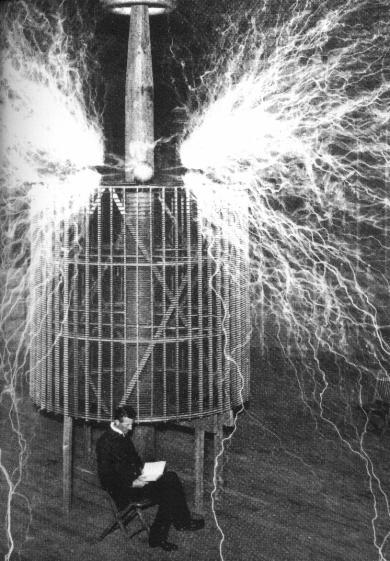
Nikola Tesla was the mad scientist of the 1800's, he created many contraptions relating to electricity and showed them off to masses. As you can see above, Nikola Tesla is sitting inside a cage as jolts of electricity travel around him, without actually touching him. The cage protects him as a tesla coil sends an immense amount of energy outward all around him. The reason we call him mad, is because he's sitting inside reading a book as if he hasn't even been phased by this experience. Tesla went on to try other experiments with electricity and always put himself in the spotlight when he performed his scientific wonders. I got my picture here.
Subscribe to:
Posts (Atom)